
Work with Us
Begin your partnership with Noah Chemicals and our expertise
to work at solving your most complex challenges.
Insights > Biosynthesis
Biosynthesis
Conventional methods of chemical production and synthesis pose significant environmental challenges that demand modern and sustainable solutions. More scrutiny is being placed on hazardous processes and their impact on the environment. Meeting the growing demand for sustainable and eco-friendly chemical raw materials is a pressing challenge for the industry.
Biosynthesis offers a transformative solution to address sustainability concerns in the chemicals market. Continued work towards discovering and tuning natural metabolic pathways will not only reduce waste, but drastically improve yields and purities of produced materials.
By leveraging biological processes and renewable resources, biosynthesis enables the production of environmentally friendly chemical materials and provides a pathway towards a greener and more sustainable future for the industry.
Two groundbreaking applications of biosynthesis will be discussed along with how they are reshaping what we know about industrial chemical production. First, the biosynthesis of phloroglucinol and its potential use as a precursor in the synthesis of a critical explosive material will be explored. By harnessing sustainable methods and the versatile nature of a once-feared bacterial species, researchers have unlocked a more environmentally friendly approach to manufacturing precursors for the high-performance explosive 2,4,6-Trinitrobenzene-1,3,5-triamine (TATB), ensuring both efficacy and reduced ecological impact.
Shewanella is a marine bacteria famed in the biochemical world for its use in anaerobic oxidation/reduction capabilities. Its versatility and genetic tunability has seen new applications in the biosynthesis of nanomaterials for use in lithium-ion batteries. This remarkable bacteria has demonstrated the ability to produce biogenic nanomaterials with unique properties that may provide new pathways to produce electrode materials. Researchers have developed a biosynthetic pathway for more efficient and eco-friendly lithium-ion batteries, addressing the increasing demand for sustainable energy storage solutions.
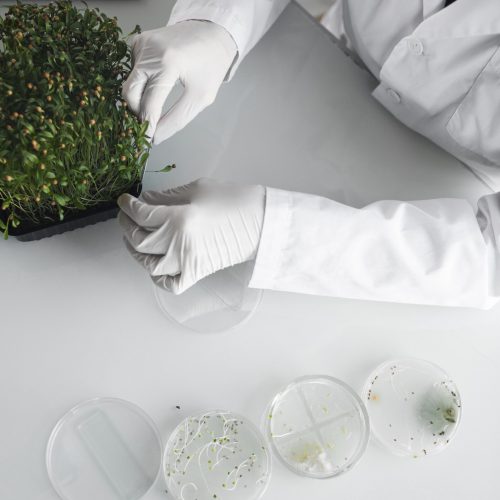
The biosynthesis of phloroglucinol represents a significant step towards more sustainable manufacturing of explosive materials. TATB is an aromatic explosive compound noted for its low sensitivity to ignition and detonation stimuli.[1] This makes it a critical explosive material for use in sensitive applications such as nuclear weapons. Historically, TATB was produced via the nitration of 1,3,5-trichlorobenzene, followed by ammonolysis. This method of preparation was resource-intensive and required the storage of large amounts of anhydrous ammonia, presenting a hazard for populated areas around manufacturing facilities.
TATB production is gradually transitioning to a method that utilizes the transamination of phloroglucinol, allowing for a safer and more cost-effective process that minimizes waste generation. Phloroglucinol is readily found in nature as a secondary metabolite of glucose metabolization in plants, algae, and bacteria. Developing a map of the metabolic pathway that produces phloroglucinol was the key that allowed a joint effort between MIT, the Navy, and Oak Ridge National Laboratory to genetically engineer E. Coli to produce high-purity phloroglucinol under controlled conditions.[2] Future implementation of this work will allow the military to tap into a reliable method for the manufacture of this TATB precursor without relying on importation. It also significantly reduces the environmental footprint of the process, addressing the pressing need for more sustainable manufacturing processes in the explosives industry.
The important thing in science is not so much to obtain new facts as to discover new ways of thinking about them.”
William Lawrence Bragg
Shewanella, a well-studied genus of marine bacteria, have garnered attention in the biochemical realm as a potential microbial “fuel cell”. The Shewanella genus is characterized by anaerobic, aquatic bacterial species that prefer deep water environments. The genus is also noted for its ability to reduce or oxidize metal compounds in a cyclic manner. For example, Shewanella bacteria reversibly oxidize/reduce Manganese/Manganese Dioxide nanoparticles under specific environmental conditions.[3]
The remarkable versatility of these organisms has opened up a new and exciting research avenue: the biosynthesis of nanomaterials for use in lithium-ion batteries. Through additional study of these fascinating organisms, researchers have discovered that Shewanella could be used to produce biogenic nanomaterials with unique morphologies. Shewenella bacteria are anaerobic, meaning that their metabolic pathways can be manipulated to provide straightforward synthesis pathways for the creation of unique nanomaterials under ambient, oxygen-free conditions.[4] In a fascinating application of Shewenella bacteria’s capabilities, the organism was used to oxidize dissolved arsenic contaminants in aqueous media, causing non-soluble, nanostructured As4S4 to precipitate out. The As4S4 nanomaterial was used to produce field-effect transistors with noted improvements.[6,7,8] The utilization of biosynthesized nanomaterials opens the door for more efficient, sustainable, and eco-friendly energy storage solutions, which are increasingly demanded in global the quest for a greener future.

The application of biosynthesis techniques in the production of phloroglucinol for TATB production and the production of nanomaterials by Shewanella for lithium-ion batteries showcase the transformative power of natural systems. Millions of years of evolutionary fine-tuning has lent a surprising deftness and ingenuity to the microbial organisms that go mostly unnoticed throughout our lives. These advancements will continue to reshape industrial chemical production, paving the way for greener and more sustainable technologies to emerge.
Begin your partnership with Noah Chemicals and our expertise
to work at solving your most complex challenges.